


Titanium and aluminum both show up across modern everyday carry, but their similarities end at the surface.
These metals behave differently when machined, stressed, carried, and used — and those differences directly affect how a pen, pry bar, flashlight, or knife frame performs over time.
This breakdown focuses on engineering characteristics, not aesthetics, to show how each metal shapes the experience of real-world carry.
But what is the big difference between these two metals, and which is better for EDC?
There’s no single answer to this question as these metals have their pros and cons.
Well, mostly pros, but these factors will help determine which is “better”.
What is the Difference Between Titanium and Aluminum When it comes to EDC Gear?
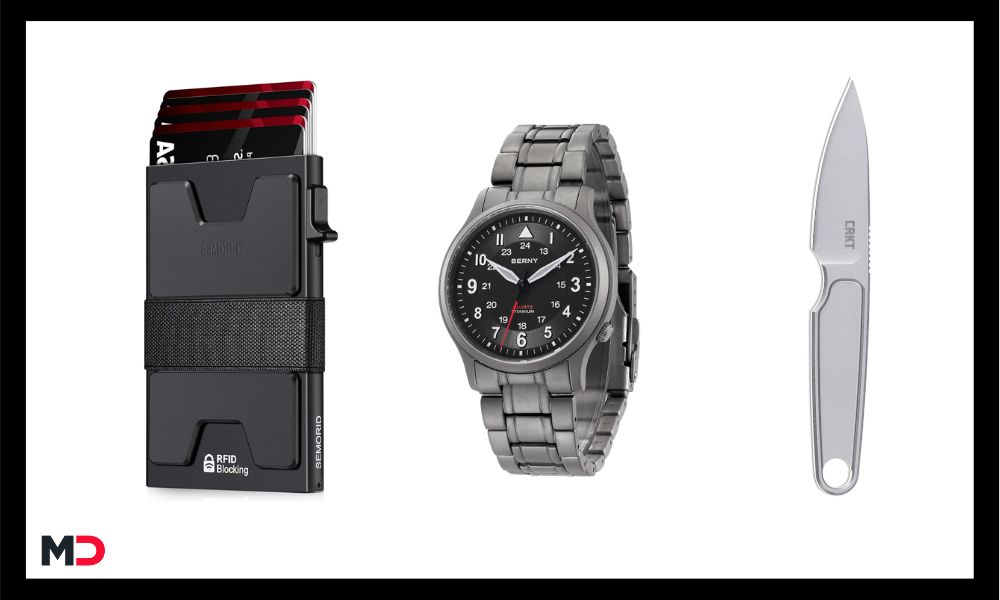
The biggest difference between titanium and aluminum in everyday carry comes down to performance versus weight.
Titanium is significantly stronger, more rigid, and more durable, making it ideal for tools and gear designed to take stress, leverage, or long-term wear.
Aluminum is much lighter and easier to machine, which makes it perfect for minimalist pens, wallets, and accessories where low weight matters more than brute strength.
In short: titanium prioritizes longevity and reliability, while aluminum focuses on efficiency and carry comfort.
Structural Strength
Titanium has one of the highest strength-to-weight ratios of any practical metal.
It resists bending, deformation, and impact far better than aluminum, which is why it’s used in knife frames, tool bodies, and any component expected to take pressure.
Titanium: exceptional rigidity and resilience
Aluminum: strong for its weight, but can flex or dent under force
For tools that take torque, leverage, or real stress, titanium is in another league.
Machinability
Makers often choose aluminum because it’s easier — and cheaper — to machine.
Titanium is tougher on tooling, generates more heat, and demands slower cutting speeds.
This affects the final product in subtle ways:
Titanium:
- deeper machining marks
- tighter tolerances
- higher precision potential
- more expensive to manufacture
Aluminum:
- cleaner, quicker machining
- easier to produce in volume
- lower cost
The difficulty of working with titanium is part of why it feels premium: it simply takes more to make.
Weight-to-Strength Ratio
Both metals are lightweight, but titanium’s strength allows thinner profiles while maintaining structural integrity.
Titanium:
Strong enough that makers can reduce material without sacrificing durability.
Aluminum:
Requires thicker walls or supports to achieve similar stiffness.
In EDC gear, that often means titanium pieces feel denser and more compact, while aluminum items feel airier.
Thermal Behavior
Both metals draw temperature, but they handle heat differently:
Titanium:
Stays neutral in the hand and warms quickly during carry.
Aluminum:
Transfers heat faster, often feeling colder in winter and hotter in direct sun.
This matters for pens, flashlights, and any item you grip frequently.
Corrosion and Wear
Titanium forms an oxide layer that protects it almost completely from corrosion — salt, sweat, humidity, and water have little effect on it.
Aluminum also resists corrosion, but its protection comes mainly from anodizing.
Titanium: naturally corrosion-proof
Aluminum: relies on anodizing; scratches can expose raw metal
For hard-use gear or humid environments, titanium offers unmatched stability.
Functional Lifespan
Because titanium flexes less and withstands impact better, it maintains its structural integrity much longer.
Aluminum gear can last years, but under repeated stress it’s more prone to bending or wearing down.
Titanium: long-life, heirloom potential
Aluminum: ideal for lightweight carry but not for repeated heavy loads
Best Applications for Each
Titanium excels in:
- knife handles and lockbars
- pry bars
- pens designed for lifetime use
- flashlights
- structural components
- any part that takes load or impact
Aluminum excels in:
- minimalist wallets
- lightweight pens
- budget-friendly tools
- desk gear
- items where weight matters more than durability
Which Should You Choose?
Choose titanium if you want maximum strength, longevity, and precision — gear that feels engineered and dependable.
Choose aluminum if you prefer the lightest possible carry and appreciate clean machining at a lower cost.
For most EDC enthusiasts, the choice comes down to whether you prioritize performance (titanium) or weight savings and affordability (aluminum).