
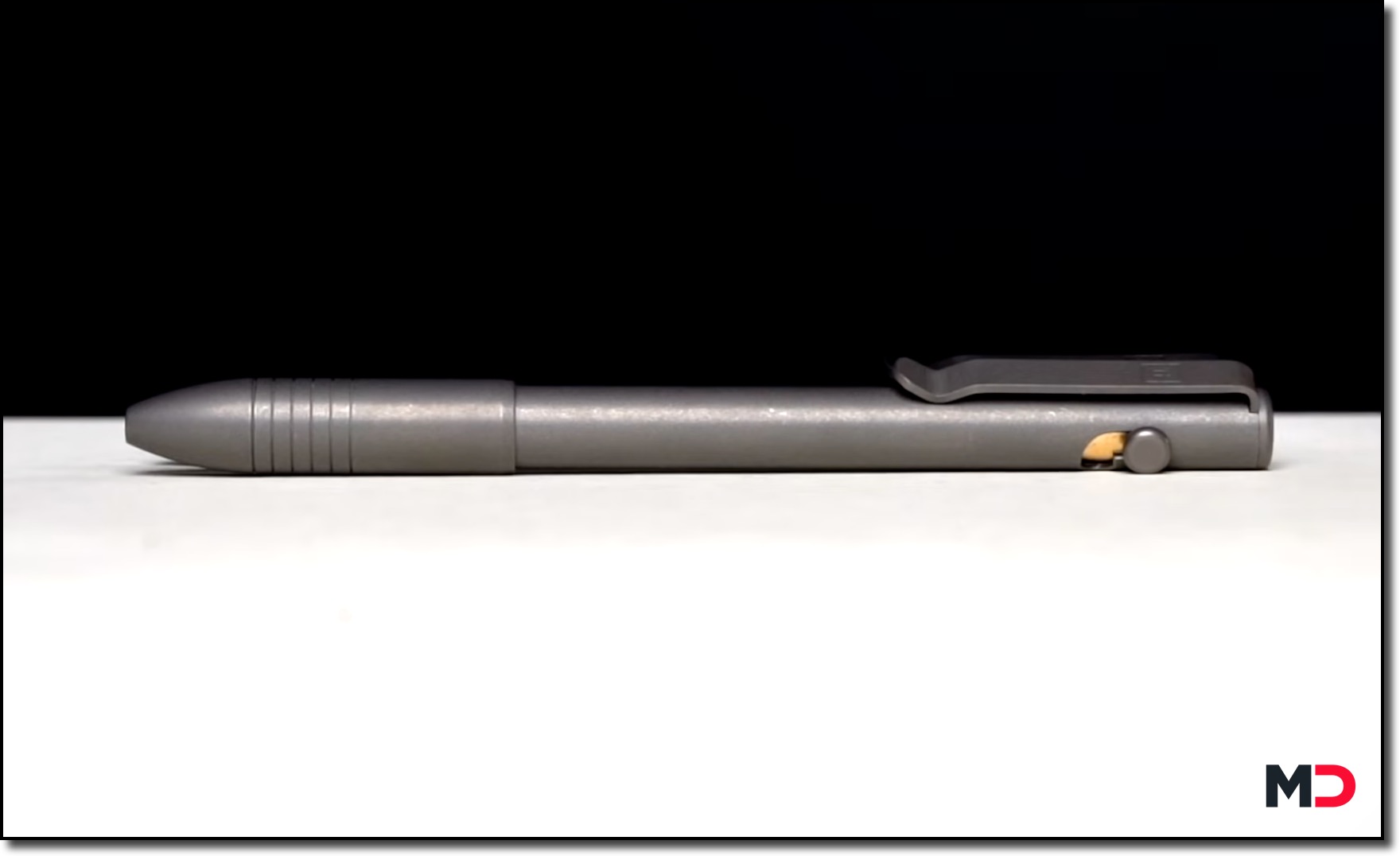

Learning how bolt-action pens work will not only make you get one, but you will also appreciate how and what something so simple can do for you.
I love bolt-action pens, and my everyday carry (EDC) will not be complete without one.
Bolt-action pens might not be very popular in the office or schools, but if you are an EDC enthusiast, you will eventually come across one and get one for yourself.
So, let’s see how bolt-action pens work, a little history, and why they are so darn addictive.
How Bolt-Action Pens Work (EDC Breakdown)
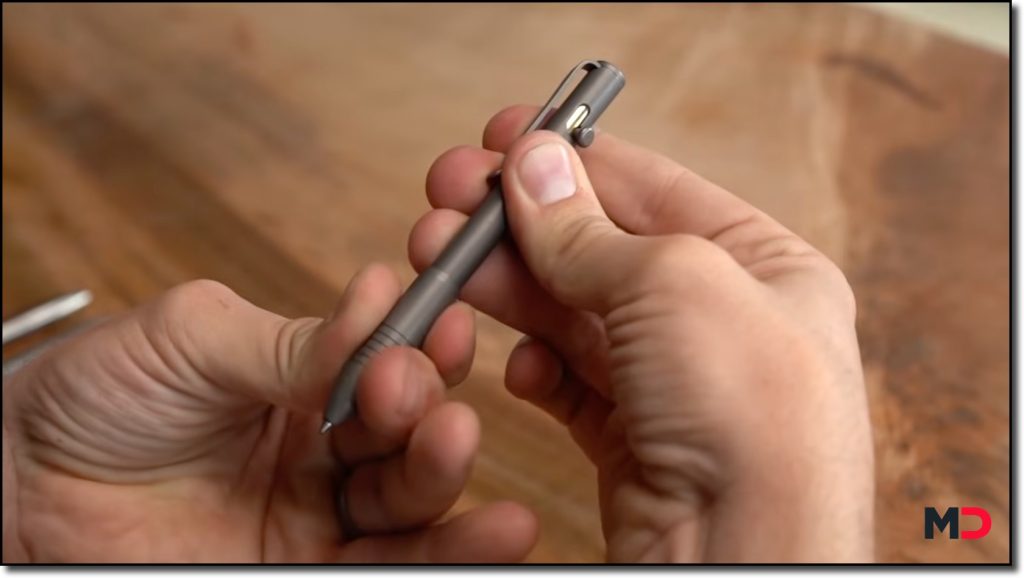
Bolt-action pens have become one of the most iconic pieces of modern EDC gear.
They look great, feel mechanical, and offer a fidget-friendly action that makes click pens feel boring by comparison.
But what actually makes a bolt-action pen work?
And why are so many EDC makers choosing this mechanism?
Let’s break it down in a simple, visual way.
The Basic Mechanism
At its core, a bolt-action pen uses a small metal bolt or slider that travels along a machined track in the pen’s barrel.
Instead of clicking or twisting the pen, you manually push the bolt along this track until it locks the ink cartridge into position.
The track is typically shaped like a sideways “L” or “Z,” allowing the bolt to drop into a locking notch.
Once the bolt sits in that notch, the writing tip stays extended.
To retract the tip, you slide the bolt back up and out of the notch, then return it to the starting position.
It’s a simple idea — but the appeal is in the execution.
Why EDC Makers Love the Bolt Action
There are a few reasons bolt-action pens have exploded in popularity in the last few years, especially among metal-gear and EDC fans:
• Mechanical satisfaction
The sliding action is smooth, tactile, and addictive. It’s a pen you want to pick up just to play with. This is the same exact reason I love them and why I absolutely need one in my EDC.
• Durability
Bolt-action mechanisms are made from metal, not plastic. Titanium, brass, copper, and stainless steel versions are built to last for decades.
• Reliability
No springs to break. No weak plastic parts. The bolt mechanism rarely fails.
• One-handed use
Once you get used to it, the action becomes quick and intuitive.
• Machining artistry
Many EDC makers use bolt-action pens as a canvas to show off precision machining, finishes, and custom materials.
The Components Inside a Bolt-Action Pen
Here’s what’s usually going on:
- A metal body (titanium, brass, copper, or stainless steel)
- A machined track that guides the bolt
- A bolt or slider made from the same or complementary metal
- A refill cartridge (often Pilot G2 or Schmidt EasyFlow)
- A spring to provide tension
- A tip housing
Everything is designed to lock together tightly, with precise tolerances. This is why cheap bolt-action pens often feel loose, while high-end ones from Tactile Turn, Big Idea Design, or Nottingham Tactical feel rock solid.
Types of Bolt-Action Tracks
Different makers use different track designs, and each one feels slightly different in hand.
Straight Track
A simple forward push with a single locking point.
L-Track
The most common design: push forward, drop down, then lock.
Z-Track
Creates a more aggressive “click-in” feel with multiple notches.
Wave Track
Smooth, curved motion for a quieter action.
Each design creates a unique user experience — part function, part personality.
Why Bolt-Action Pens Fit the EDC Philosophy
A bolt-action pen checks every box EDC people care about:
• all-metal construction
• mechanical simplicity
• durability
• minimal fail points
• everyday usefulness
• satisfying action
It’s not just a writing tool — it’s a pocket-friendly piece of mechanical art.
Final Thoughts
Bolt-action pens are one of the most enjoyable pieces of EDC gear because they combine engineering, aesthetics, and daily utility into a single object.
Understanding how they work gives you even more appreciation for the craftsmanship behind them — especially when you’re dealing with titanium or beautifully machined brass and copper options.
You gotta try one if you haven’t.
Trust me.
Whether you’re adding one to your own carry or just love the mechanics behind your gear, the bolt-action mechanism is one of the cleanest examples of functional design in the EDC world.
Now that you know how bolt-action pens work, do you think they are worth it?
Because we all know that they aren’t the same price as a pack of Bic pens.