
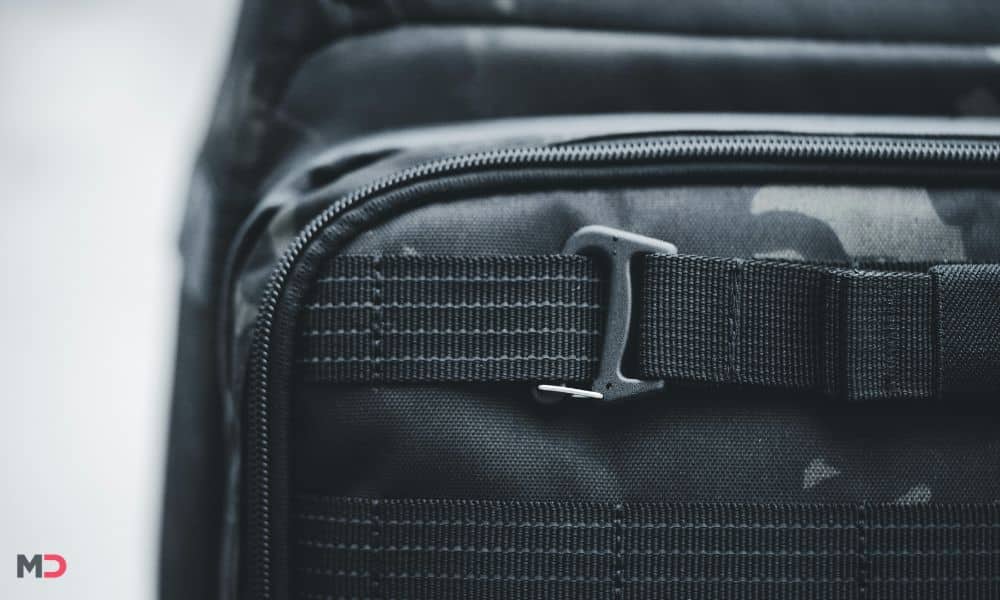

Backpack materials are often judged by numbers, but what matters more is how a backpack is actually used every day.
Denier ratings, brand names, and marketing terms tend to dominate the conversation.
For everyday carry, those details matter far less than how a fabric behaves over time.
An EDC backpack is handled constantly.
It gets set down on rough surfaces, brushed against clothing, opened and closed repeatedly, and carried lightly most of the time.
The materials that work best here are not always the toughest on paper, but the ones that age well under daily friction.
Understanding backpack materials for everyday carry is about behavior, not hype. How a fabric resists abrasion, how it creases, how it softens or stiffens over time, and how it interacts with stitching and hardware all play a role in long-term satisfaction.
Once you know how common backpack materials actually perform in daily use, choosing the right bag becomes much simpler.
Nylon vs Polyester: What the Difference Really Is
Nylon and polyester are the two most common fabrics used in everyday carry backpacks.
On paper, they can look similar, but in daily use, they behave differently.
Nylon is generally more abrasion-resistant.
It tends to flex rather than crack or fray, which makes it better for backpacks that see frequent contact with clothing, desks, and rough surfaces.
Over time, nylon usually softens slightly while maintaining its strength.
Polyester is more rigid.
It holds its shape well and resists stretching, but it can show wear sooner in high-friction areas.
Once the surface fibers break down, the fabric can feel rougher and look more worn compared to nylon.
For everyday carry, nylon often feels more forgiving.
It handles repeated movement and contact better, especially in slimmer bags that are worn close to the body.
Polyester can still work well, particularly in structured designs, but it tends to prioritize shape over long-term flexibility.
The key takeaway is not that one material is always better, but that nylon usually adapts to daily use more gracefully, while polyester favors stability and form.
Cordura and High-Denier Fabrics
Cordura and other high-denier fabrics are often treated as the gold standard for backpack durability.
They are tough, don’t wear easily, and built to handle heavy use.
For everyday carry, though, toughness alone does not tell the full story.
High-denier fabrics excel in environments where packs are dragged, dropped, or heavily loaded.
In daily carry, that level of ruggedness can come with trade-offs.
Thicker fabrics add weight, stiffness, and bulk, which can make a backpack feel overbuilt when it is lightly packed.
Cordura tends to hold its structure longer than standard nylon.
This can be a benefit for bags that need to keep their shape, but it can also make them feel rigid in close quarters.
Over time, high-denier fabrics often soften, but they rarely disappear on the back the way lighter materials do.
For everyday carry, these fabrics make the most sense when used selectively.
Reinforced bottoms, high-wear panels, and stress areas benefit from extra toughness, while the rest of the bag can remain lighter and more flexible.
Durability still matters, but in EDC backpacks, smart material placement often matters more than maximum strength everywhere.
X-Pac and Laminated Fabrics
X-Pac and other laminated fabrics have become popular in everyday carry because they offer a different balance of weight, structure, and durability compared to traditional woven materials.
These fabrics are built in layers.
Instead of relying on a single woven textile, they combine a face fabric with internal reinforcement and backing.
This creates a material that resists stretching, holds its shape well, and stays relatively light for its strength.
In daily carry, laminated fabrics feel more structured.
Backpacks made with X-Pac tend to keep their profile even when lightly loaded, which some people appreciate.
They also resist moisture well and clean up easily, making them practical for urban environments.
The trade-off is feel and sound.
Laminated fabrics are stiffer than nylon or Cordura and can feel less forgiving when the bag is worn close to the body.
They may also crease over time, especially in high-flex areas, which gives them a distinct worn look that not everyone likes.
For everyday carry, X-Pac works best in designs that benefit from structure and weather resistance.
In softer, minimalist packs, traditional woven fabrics often feel more natural over long-term daily use.
Lining Fabrics and Interior Wear
Interior materials rarely get attention, but they play a big role in how a backpack holds up over time.
In everyday carry, the inside of a bag sees just as much friction as the outside.
Lining fabrics take constant abuse from hard edges, zippers, tools, and electronics.
Thin or overly slick linings may feel nice at first, but they can tear or wear through quickly in high-contact areas.
Once the lining fails, the bag often feels worn out even if the exterior still looks fine.
This happens too often with the cheaper bags I’ve purchased, which is why I stick to premium gear these days. I mean, who wants a bag that’s supposed to be waterproof and, although it looks great from the outside, can not do its job because the inner lining is falling apart?
Slightly heavier interior fabrics tend to age better.
They resist abrasion, hold stitching more securely, and feel less fragile during daily use.
Neutral or lighter interior colors can also make items easier to find, reducing unnecessary digging and wear.
Interior organization should work with the lining, not against it.
Excessive internal pockets and dividers add seams and stress points that accelerate wear.
Simpler interiors with fewer stitched sections usually last longer and remain more flexible.
For everyday carry, interior materials should feel durable but unobtrusive.
When a backpack works well, you rarely notice the lining at all, which is usually a sign it was chosen correctly.
Zippers, Hardware, and Stitching
Even the best fabrics fail quickly if the construction is weak.
In everyday carry backpacks, zippers, hardware, and stitching usually determine lifespan more than the outer material.
Zippers are the most used component on any backpack.
Smooth operation matters more than size or branding.
A zipper that runs cleanly and resists snagging will outlast a heavier zipper that is constantly forced.
Consistency over time is the real test in daily use.
Hardware should be simple and durable.
Buckles, adjustment points, and clips are handled frequently, often without much thought.
Overly complex hardware adds failure points and can feel unnecessary in everyday carry.
Straightforward designs tend to age better and stay functional longer.
Stitching is where materials come together, and it deserves attention.
Reinforced stitching at stress points like strap attachments, zipper ends, and bottom panels makes a noticeable difference over time.
Clean, even stitching is often a better indicator of quality than fabric choice alone.
For everyday carry, good construction feels invisible.
The bag opens smoothly, carries comfortably, and holds together without demanding attention.
When zippers, hardware, and stitching work quietly in the background, the materials can do their job properly.
Choosing Materials Based on How You Carry
The best backpack materials depend less on specifications and more on how the bag is actually used.
Everyday carry puts unique demands on fabrics and construction, and those demands vary from person to person.
If your backpack is worn lightly and often, flexible materials like standard nylon tend to feel more comfortable over time.
They move with the body, soften with use, and handle constant friction well.
For minimal daily loads, this balance usually feels right.
If you carry heavier items or prefer a bag that holds its shape, reinforced fabrics or laminated materials make more sense.
They offer structure and stability, especially in slimmer designs that need to stay upright and organized.
For high-wear areas, durability matters more than overall fabric choice.
Reinforced bottoms, strong stitching, and reliable zippers often have a bigger impact on longevity than the primary fabric alone.
Choosing materials for everyday carry is about matching behavior to use.
When fabrics, construction, and design align with how you carry, the backpack becomes easier to live with and lasts longer without feeling overbuilt.
Backpack materials matter most when they fade into the background of daily use.
The best fabrics, linings, and components are not the most extreme on paper, but the ones that hold up quietly to repetition, friction, and light loads.
When materials are chosen to match how a backpack is actually carried, the bag feels easier to live with and lasts longer without feeling stiff or overbuilt.
Understanding how these materials behave in everyday carry makes it easier to choose a backpack that still feels right long after the first few weeks of use.