
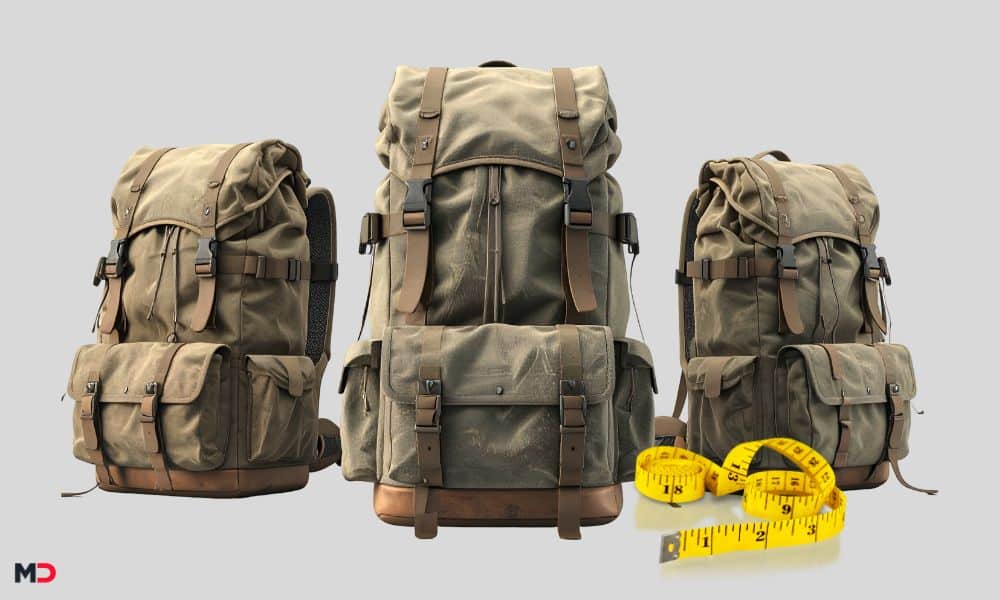

Backpack size is one of the most misunderstood parts of everyday carry, especially when people overlook what actually makes a backpack work for everyday carry.
Capacity numbers get a lot of attention, but they rarely reflect how a backpack actually feels or functions in daily use.
Most people carry far less than they think on a typical day.
A laptop, a few small items, maybe a jacket, and maybe your favorite fidget toy.
Yet many backpacks are sized for situations that rarely happen, which leads to bags that feel oversized, unbalanced, or awkward when lightly packed.
For everyday carry, size is less about liters and more about proportion.
How the bag sits on the body, how it holds its shape when partially filled, and how easily it moves through tight spaces matter more than raw capacity.
Most of you reading this post are having that exact problem, and that’s okay.
Understanding backpack size for everyday carry helps avoid overbuying and overpacking.
It makes it easier to choose a bag that feels natural day to day, instead of one that only makes sense in theory.
Why Liters Don’t Tell the Whole Story
Backpack size is usually described in liters, but that number alone rarely explains how a bag actually carries.
Two backpacks with the same listed capacity can feel completely different in daily use.
Liters measure internal volume, not shape or layout.
A tall, narrow backpack may carry 20 liters comfortably and stay close to the body, while a shorter, wider bag with the same capacity can feel bulky and awkward.
How space is distributed matters more than how much space exists.
Structure also plays a role.
Stiff panels, thick padding, and rigid organization reduce usable space and affect how a bag feels when lightly loaded.
A softer bag may compress naturally, while a structured bag holds its full profile regardless of how much is inside.
For everyday carry, the goal is not to maximize volume.
It is to choose a size that carries efficiently with the items you use most days.
Liters are a reference point, but they should never be the deciding factor on their own.
Common EDC Backpack Size Ranges
For everyday carry, most backpacks fall into a relatively narrow range of sizes. Understanding what those ranges feel like in practice makes choosing the right bag much easier.
Under 15 liters
Backpacks in this range are very compact. They work well for minimal carry like a tablet, small notebook, and a few essentials. For laptop carry, they often feel tight and leave little room for flexibility. These bags excel when staying slim matters more than versatility.
15 to 20 liters
This is the sweet spot for most everyday carry setups. There is usually enough room for a laptop, charger, a few small items, and occasional extras like a light jacket. Bags in this range stay close to the body and avoid the bulky feel of larger packs when lightly loaded.
20 to 25 liters
This range adds flexibility without immediately feeling oversized. It works well if you carry bulkier items, need room for food or gym gear, or want space for occasional overpacking. At the upper end, profile and structure become more important to prevent the bag from feeling boxy.
Over 25 liters
Backpacks above this range are usually better suited for travel or all-day loads. For everyday carry, they often feel too large unless you consistently need the space. When lightly packed, they tend to look and feel disproportionate.
For most people, everyday carry works best when the bag feels slightly smaller than what you think you need. A well-designed backpack in the right size range will feel easier to live with day to day.
How Profile and Structure Affect Size
Backpack size is not just about capacity.
Profile and structure often determine whether a bag feels compact or bulky in daily use.
A slim backpack that stays close to the body usually feels smaller than its listed capacity.
Narrow designs distribute weight vertically and avoid sticking out, which makes moving through doorways, sitting down, or wearing the bag in crowded spaces more comfortable.
Structure plays a big role here.
Highly structured backpacks hold their shape no matter how much is inside.
This can be useful for organization, but it also means the bag takes up the same amount of space whether it is full or nearly empty.
In everyday carry, that rigidity can make a backpack feel larger than it needs to be.
Softer backpacks tend to compress when lightly loaded.
They adapt to what you carry instead of forcing a fixed shape.
This often makes them feel smaller in practice, even if the capacity number is similar to a more rigid design.
For everyday carry, the best size is one that disappears when worn.
A balanced profile and moderate structure usually matter more than gaining a few extra liters of space.
How Much Space You Actually Need
Most everyday carry setups are smaller than people expect.
Once you break down what you carry on a typical day, the required space becomes clearer.
For many people, daily carry consists of a laptop or tablet, a charger, a few small personal items, and maybe one flexible extra like a jacket or water bottle.
That load rarely fills a large backpack, even though many bags are designed as if it will.
Problems usually come from planning for edge cases instead of daily reality.
Carrying a larger backpack “just in case” often leads to overpacking or dealing with extra bulk for situations that happen infrequently.
In everyday use, that extra space becomes dead weight.
Choosing a backpack size that fits your most common carry forces better decisions.
It keeps the bag lighter, more comfortable, and easier to live with.
When space is limited but sufficient, items stay organized naturally instead of shifting around.
For everyday carry, the right size is the one that supports what you carry most days, not what you might carry once in a while.
When a Larger Backpack Makes Sense
While smaller backpacks work best for most everyday carry situations, there are cases where a larger bag is the better choice.
If your daily routine regularly includes bulky items like a camera, gym clothes, or packed meals, extra space can be practical.
The same applies if your day often shifts between work, errands, and activities that require different gear.
In those situations, a backpack in the upper end of the EDC size range can feel more accommodating without becoming a full travel pack.
Larger backpacks also make sense if you prefer flexibility over minimalism.
Some people would rather carry a slightly bigger bag than constantly reorganize or leave items behind.
When designed well, a larger backpack with a slim profile can still work for everyday use.
The key is intent.
A larger backpack should be chosen because it supports your actual routine, not because it seems safer or more versatile on paper.
When the size matches real needs, the bag feels useful rather than excessive.
Choosing the Right Size for Everyday Carry
The right backpack size for everyday carry is the one that feels natural most of the time.
It should carry what you use daily without encouraging you to add more just because there is space available.
Smaller backpacks tend to stay comfortable, balanced, and out of the way.
They move easily through daily environments and feel lighter because they are not built around unused capacity.
Larger backpacks can work when your routine truly demands it, but they should still feel intentional rather than oversized.
Choosing size based on real habits instead of hypothetical scenarios leads to better long-term satisfaction.
When a backpack fits your daily carry without excess bulk, it becomes easier to live with and easier to keep using.
Everyday carry works best when the bag supports your routine instead of shaping it.
Size is one of the simplest ways to get that balance right.