
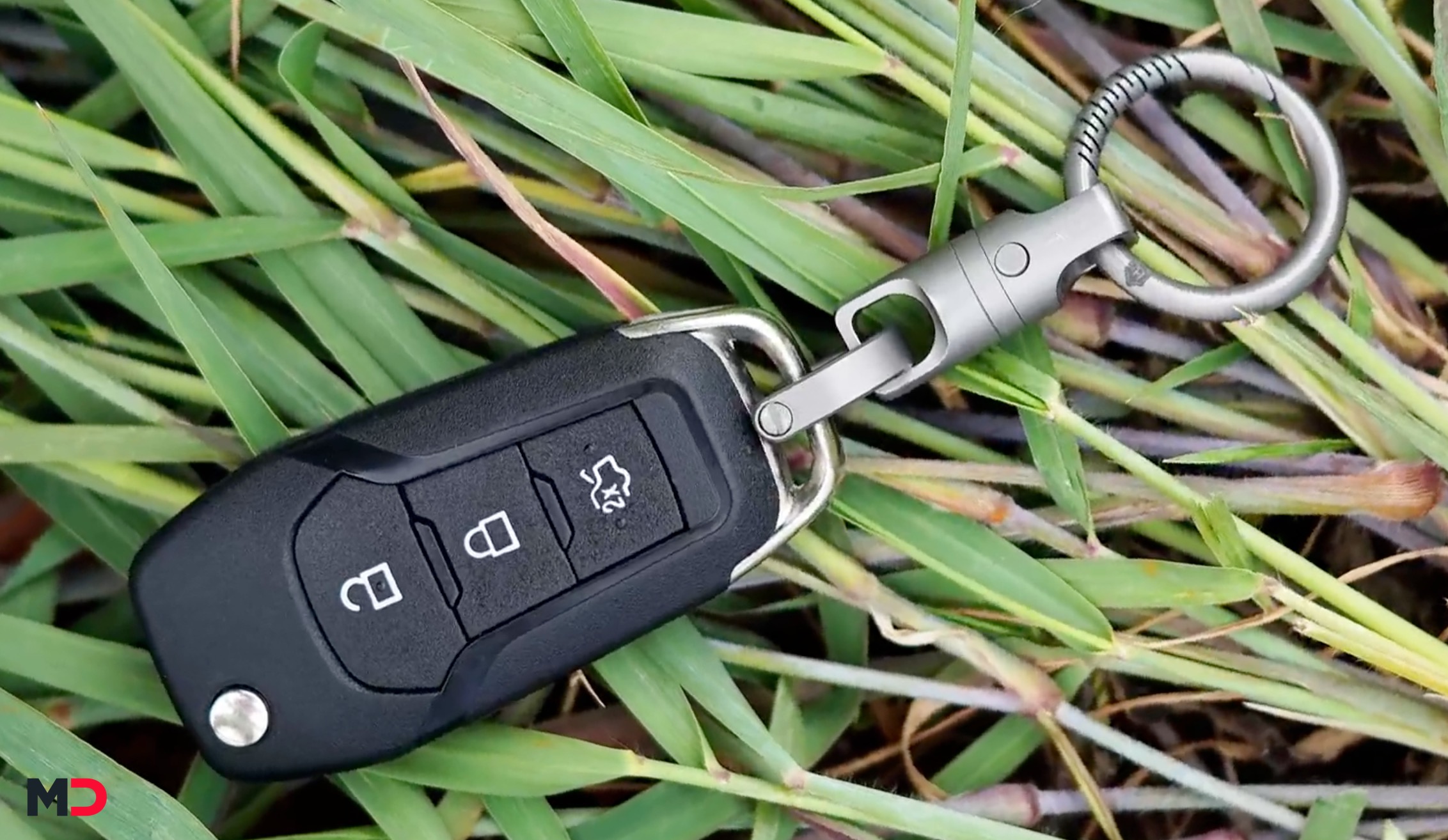

Magnetic quick-release keychains look simple on the outside, but there’s a surprising amount of engineering packed into that tiny connector.
These compact metal couplers let you detach keys, tools, and accessories with a single pull—no carabiners, no split rings, no frustration.
And when built from titanium or stainless steel, they become one of the most satisfying little upgrades in an everyday carry setup.
Here’s a look at how they actually work.
Magnetic Coupling

At the core of every quick-release system is a pair of opposing magnets seated inside a machined metal housing.
When the two halves come together, the magnetic fields align and snap into a stable locked position.
The most common setups use neodymium magnets because they offer high pull strength in a compact size.
What matters most isn’t just magnet strength, but how precisely the metal housings are machined.
Tight tolerances ensure smooth engagement, less wobble, and a cleaner “snap” when the two halves connect.
The Locking Geometry
Most quick-release keychains use a combination of magnetic force and mechanical geometry to stay together.
This usually involves a recessed channel or chamfer on one side, and a protruding ring or lip on the other.
The shapes guide the two halves together and prevent side-to-side slipping.
This means the magnet isn’t doing all the work—it’s more like the anchor that holds a precision-cut interface in place.
One-Handed Release

A well-designed magnetic release separates cleanly with a straight pull.
The geometry resists lateral motion, so you can tug down to release your keys without twisting or unscrewing anything.
This is why quick-release keychains feel instantly intuitive: they operate in the same direction your hand naturally pulls when removing a key or tool.
Materials Matter
Most premium quick-release keychains use titanium for its weight-to-strength ratio and corrosion resistance.
Steel options offer stronger magnetic response since titanium isn’t magnetic, but they tend to be heavier.
Aluminum versions exist too, but they rarely hold up to long-term pocket wear.
For EDC, titanium housings paired with neodymium magnets strike the ideal balance of durability, feel, and performance.
Why They’re Worth Carrying
A magnetic quick-release keychain solves a problem you don’t notice until the moment you do—when you need to detach a single key fast.
Whether it’s a bike lock, mailbox key, gym tag, or a tool you use frequently, the quick-release becomes one of the most convenient micro-upgrades in a daily setup.
Minimal, durable, and mechanically satisfying—exactly the kind of detail that elevates a carry.