
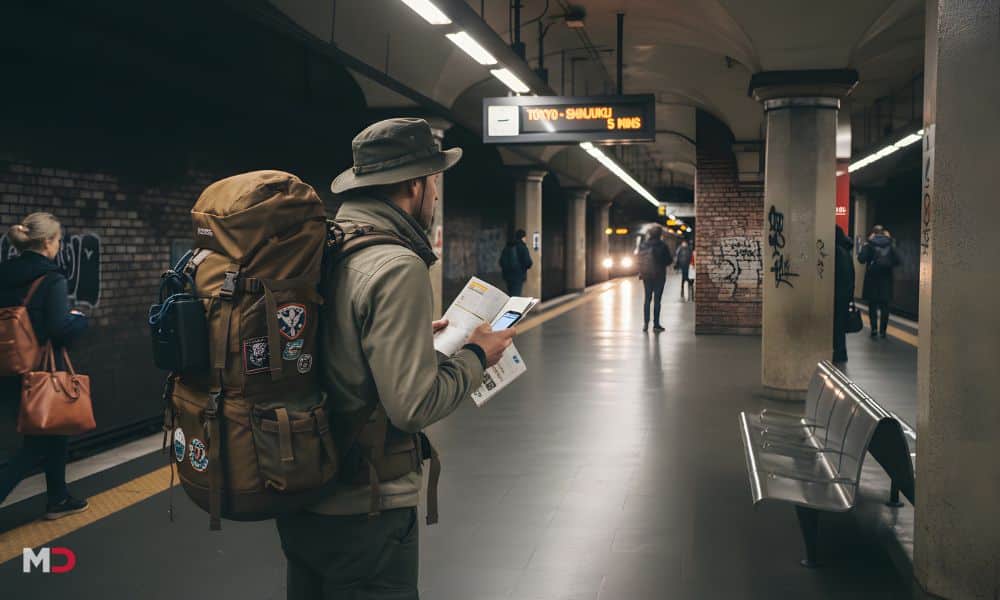

Most backpacks are not designed for everyday carry.
Period.
They are designed for travel, outdoor use, or general purpose, which is, by the way, not EDC.
As a result, they often miss what actually matters when a bag is carried every single day.
An everyday carry backpack lives in close quarters.
It gets worn for short trips, set down often, packed lightly, and accessed repeatedly.
Comfort, size, materials, and layout matter more here than maximum capacity or feature count.
A good EDC backpack is not about carrying more.
It is about carrying better.
It should disappear when worn, stay balanced when loaded lightly, and hold up to constant use without feeling bulky or overbuilt.
Understanding what makes a backpack work for everyday carry helps separate practical designs from bags that simply look good in photos.
It also makes choosing the right backpack much easier once you know what to prioritize and what to ignore.
Everyday Carry vs Travel vs Outdoor Backpacks
Backpacks are often lumped into one category, but everyday carry backpacks serve a very different purpose than travel or outdoor packs.
Travel backpacks are built around capacity and organization.
They are designed to hold clothing, shoes, and bulkier items, often with multiple compartments and rigid structure.
This works well for trips, but it usually feels oversized and awkward for daily use.
Outdoor backpacks focus on load distribution and long-duration comfort.
Frames, thick padding, and technical materials help when carrying heavy weight for hours.
For everyday carry, that same structure can feel excessive and stiff, especially when the bag is lightly loaded.
Everyday carry backpacks sit between those two extremes.
They prioritize a slim profile, easy access, and comfort with lighter loads.
Instead of maximizing space, they focus on efficiency.
The bag should feel balanced with only a laptop, a few tools, and daily essentials inside.
Understanding this difference matters because many backpacks fail at EDC simply by being designed for the wrong job.
A great travel or outdoor pack can be frustrating to use every day, while a good EDC backpack feels natural in short bursts of carry throughout the day.
Size and Profile
For everyday carry, backpack size is less about capacity and more about restraint.
Most people carry far less on a daily basis than they think, yet many backpacks are built to accommodate much more than that.
A good EDC backpack stays slim when lightly loaded.
It should sit close to the body, move with you, and avoid that top-heavy or boxy feel that larger packs create.
Oversized bags tend to swing, catch on chairs, and feel awkward in tight spaces, even when they are mostly empty.
In practice, many everyday carry setups work best in the 15 to 20 liter range.
This is usually enough space for a laptop, basic tools, chargers, and personal items without encouraging overpacking.
Larger bags often lead to filling space simply because it is there.
Not a good idea.
Profile matters as much as volume.
A backpack that distributes weight vertically and stays narrow feels lighter than one that spreads outward.
Slim designs also age better in daily use, as they place less stress on seams, zippers, and straps.
For everyday carry, the goal is not to plan for every scenario.
It is to choose a size that supports what you actually carry most days and feels comfortable doing it.
Materials That Matter
Materials play a bigger role in everyday carry backpacks than most people realize, especially when it comes to how materials age over time.
Unlike travel or outdoor packs, EDC backpacks experience constant low-level wear rather than occasional heavy abuse.
The right materials hold up quietly over time without adding unnecessary weight or stiffness.
Most EDC backpacks rely on synthetic fabrics like nylon or polyester blends.
What matters more than brand names is how those fabrics behave.
Denser weaves resist abrasion better but can feel stiff.
Lighter fabrics reduce weight but may show wear sooner in high-contact areas.
Reinforcement matters more than raw toughness.
Stress points like the bottom panel, zipper tracks, and strap attachment areas determine how long a backpack lasts.
A moderately durable fabric with good reinforcement will outlast a tougher fabric that is poorly supported.
Hardware is often overlooked and can/will cause more problems in the future.
Zippers, buckles, and adjustment points see constant use in daily carry.
Smooth, reliable zippers and simple, durable hardware matter more than specialized features meant for occasional trips or heavy loads.
For everyday carry, materials should feel balanced, offering lightweight durability without unnecessary stiffness or bulk.
Durable without being rigid.
Light without feeling fragile.
The best EDC backpacks use materials that disappear into the background while quietly doing their job day after day.
Carry Comfort in Daily Use
Comfort in an everyday carry backpack is different from comfort in a travel or outdoor pack.
EDC backpacks are worn frequently, but usually for shorter periods.
That changes what actually matters.
Straps should be supportive without being bulky.
Thick, heavily padded straps are designed for heavier loads and long carries, but they can feel excessive when the bag is lightly packed.
For EDC, moderate padding with some structure is usually more comfortable and less restrictive.
Fit and balance matter more than cushioning.
A backpack that sits close to the body and keeps weight centered feels lighter than one with more padding but poor weight distribution.
When the load stays tight to your back, the bag moves with you instead of against you.
Back panel design also plays a role.
Breathability is nice, but rigidity can be a downside for everyday use.
Overly stiff back panels may feel uncomfortable when sitting, leaning, or setting the bag down often throughout the day.
For everyday carry, comfort comes from restraint.
The best backpacks avoid overengineering and focus on staying stable, balanced, and unobtrusive during repeated short carries.
Organization Without Overengineering
Organization is where many everyday carry backpacks go wrong.
In an effort to stand out, designs often add more pockets, dividers, and compartments than daily use actually demands.
For EDC, organization should support quick access, not dictate how you pack.
A few well-placed pockets that handle daily essentials are more useful than a complex layout that forces items into specific slots.
Overly structured interiors also reduce flexibility, making the bag harder to adapt from day to day.
Simple layouts age better.
Fewer seams, fewer zippers, and fewer rigid dividers mean fewer failure points over time.
It also makes the bag easier to pack intuitively without thinking about where everything is supposed to go.
In everyday carry, organization works best when it stays out of the way.
The goal is to make items easy to reach without turning the backpack into a puzzle.
Durability Where It Counts
Durability in an everyday carry backpack is less about extreme materials and more about how the bag handles repeated stress.
Daily carry puts strain on the same areas over and over, and that is where most backpacks fail.
The bottom panel takes the most abuse.
Setting a bag down on concrete, floors, and rough surfaces wears this area quickly.
Reinforcement here matters more than thicker fabric on the sides or front.
Strap attachment points are another critical area.
Poor stitching or weak reinforcement at these points leads to sagging and failure long before the fabric itself wears out.
Strong stitching and layered construction here make a noticeable difference over time.
Zippers also play a major role in longevity.
A smooth, reliable zipper that resists catching will outlast heavier, overbuilt designs that strain under daily use.
Consistency matters more than size.
For everyday carry, durability should be quiet.
A backpack that holds its shape, stays intact, and works the same way after months of use is doing its job, even if it never advertises itself as indestructible.
What Most Backpack Reviews Get Wrong
Most backpack reviews focus on features instead of use.
They list pockets, fabrics, and dimensions without asking how the bag actually behaves when it is carried every day.
Everyday carry backpacks are rarely packed to capacity.
As mentioned earlier, they are worn for short periods of time and are constantly put down, picked up, and the same over and over again.
Reviews that judge them by maximum load, extreme durability claims, or travel scenarios miss what matters most in daily life.
Another common mistake is overvaluing complexity.
More pockets and features look impressive on paper, but they often add weight, stiffness, and failure points.
A simpler bag that stays comfortable and easy to use will most likely outperform a more complicated design over time.
Good EDC backpacks are not exciting in obvious ways.
They feel balanced when lightly loaded, hold up quietly to daily wear, and never demand attention.
Reviews that prioritize specs over experience will overlook these qualities.
Understanding what actually makes a backpack work for everyday carry helps filter out noise.
It shifts the focus from what a bag can do in theory to how it performs in real use, which is what ultimately matters.
Conclusion: Get a Good Everyday Carry Backpack
A good everyday carry backpack is not defined by how much it can hold or how many features it has.
It is defined by how naturally it fits into daily life.
Size, materials, comfort, organization, and durability all matter, but only in how they work together during real use.
When a backpack stays comfortable, holds up quietly, and never feels like it is fighting the way you carry, it has done its job.
That is what separates a true EDC backpack from one that only looks good on paper.